Overview
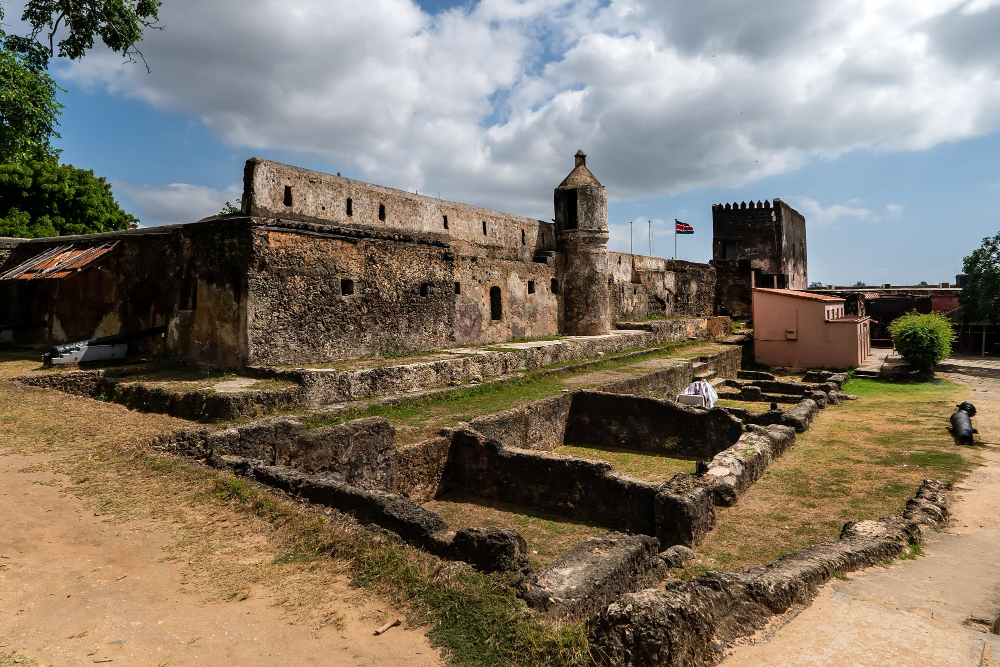
Fort Jesus is one of the most significant historical landmarks in East Africa, serving as a physical timeline of the struggle for coastal control between the 16th and 19th centuries.
Here are the key highlights and features to see:
1. Architectural Marvels
- The Renaissance Design: Designed by Italian architect Giovanni Battista Cairati, the fort was built in the shape of a man lying on his back (visible from an aerial view). It is a masterpiece of 16th-century Portuguese military engineering.
- The Massive Walls: Standing roughly 15 meters high (with an additional 3 meters added by the Omani Arabs), these coral-stone walls were designed to withstand heavy cannon fire.
- Five Bastions: Explore the strategic watchtowers and bastions, which provide panoramic views of the Mombasa Old Port and the Indian Ocean.
2. Historical Exhibits
- The Museum Gallery: Located inside the former barracks, the museum houses a vast collection of archaeological finds. Highlights include ceramics from the 9th to 19th centuries, Chinese porcelain, and beads from the "Trade Wind" routes.
- The San Antonio de Tanná Wreck: One of the most famous exhibits features artifacts recovered from the Portuguese frigate that sank off the fort during the 1697 siege.
- Oman House & Arab Influence: See the Omani house where the Sultan stayed, and look for Koran inscriptions carved into wooden door posts, marking the era of Omani rule.
3. Unique Sites Inside the Fort
- The Deep Well: A 76-foot well sunk by the Arabs to provide water during long sieges (though the water was reportedly quite salty).
- Portuguese Water Cistern: An impressive open cistern used by the Portuguese for harvesting rainwater.
- Ancient Cannons: You will find several original Portuguese and British cannons still positioned along the ramparts, aimed toward the sea to protect the harbor.
4. Modern Cultural Features
- Swahili Cultural Centre: A training hub for local youth to preserve traditional Swahili crafts, such as wood carving and embroidery.
- Mombasa Butterfly House: Located nearby on the grounds, this live exhibit showcases coastal biodiversity and the relationship between butterflies and the local environment.
Reviews
No reviews yet for this tour.